
Setting the Stage: Why Comparisons Matter Now
Here’s the straight truth, y’all: if you don’t compare, you pay—in time, in stock, in reputation. In wardrobes supply, a quiet delay on Monday can turn into empty displays by Friday. Picture this: a regional buyer juggling four vendors, two containers at port, and one surprise spec change. Last quarter, stockouts rose 18% across similar SKUs while freight costs jumped 12%—and yet, customer returns held stubborn at 7%. Does that pattern sound familiar, or a little too familiar?
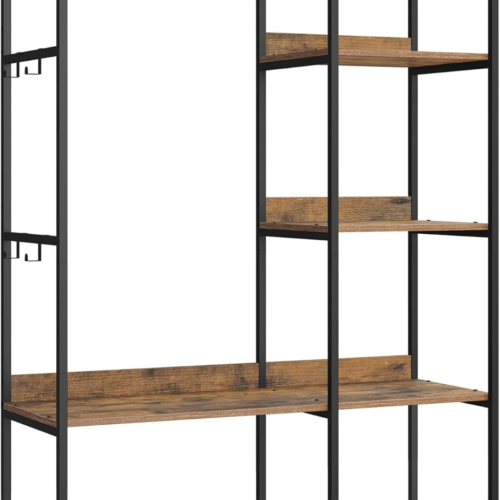
I’ve seen teams lean on habit instead of data. They keep the “trusted” partner even when lead time variance keeps creeping. They skip a proper QC audit on load-bearing rails and only find the wobble after assembly. And the bill of materials (BOM) looks fine—until tolerance stack-up bites during install. Why are we still surprised when soft numbers become hard costs? (Happens every season.) So the question is simple: what are the signals that separate a good vendor from a great one, and how do you read them fast enough to act? Let’s line up the markers and walk them down, nice and steady, before we dig into the deeper snags.
Under the Hood: The Hidden Snags in Wholesale Sourcing
Where do costs hide?
Let’s get technical and keep it plain. With wardrobe wholesale, the loud price on the quote is not the real price. Cost bleeds in from MOQ mismatches, lead time buffers, and rework when dowel joints don’t match the CNC drilling pattern. Look, it’s simpler than you think: when SKUs multiply without SKU rationalization, your cross-docking window stretches, and your warehouse eats it. Add one sloppy EDI feed, and your ERP treats phantom inventory like the real thing—funny how that works, right?
Traditional fixes fall short. Bulk-buying to “lower” unit cost raises carrying cost. One-off inspections miss systemic drift in powder coating thickness or E1 MDF core density. Freight consolidation helps, until a single late panel holds the set and your floor set launches slip a week. The pain points stay hidden in the process seams: tolerance stack-up during assembly, mismatched hardware bolts, and vendor-side substitutions that pass a visual check but fail a 500N tensile test on rails. The old playbook—negotiate price, check a sample, hope for the best—doesn’t catch variance upstream. The better move is to measure upstream controls, not downstream outcomes, and force clarity on specs, cadence, and change control. That’s where your margin is sleeping.
Comparing Tomorrow: Tech Principles and Practical Benchmarks
What’s Next
Now let’s look forward, steady and fair. The new stack isn’t flashy; it’s disciplined. Think spec-as-code: lock materials (E1 MDF grade, rail alloy, coating thickness), serialize updates, and push them through a shared portal so engineering changes don’t get “interpreted.” Add vendor telemetry—simple dashboard hooks, not science fiction—to track cycle times, scrap rates, and first-pass yield. A modern wardrobe manufacturer can expose these as read-only feeds. Pair that with lot-level barcodes, so returns map to exact batches, not product families. Then close the loop: automated receiving checks, random QC pulls, and a lightweight tolerance model that flags when hinges drift before the hinge fails. Semi-formal? Sure. But it’s the kind of semi-formal that keeps sets on the floor and keeps your weekend calm.

Real-world impact looks like this—fewer surprises, smoother weeks. Teams who switch to spec-as-code and telemetry see lead time variance drop 20–30%, with assembly rework down by a third. Margins improve not just from price but from predictability. And culture shifts, too: buyers stop firefighting and start scenario-planning (always a nicer Monday). To choose well, anchor on three metrics: 1) Process capability: Cp/Cpk on critical-to-quality features like rail strength and panel flatness; 2) Predictive accuracy: vendor forecast error versus actual ship, measured weekly; 3) Change discipline: mean time to implement an approved spec change, end-to-end. If a partner is strong on these three, the rest tends to fall in line—odd how tidy that is, right? For a grounded, data-first path forward, keep your benchmarks sharp and your playbook simple, and lean on brands that publish their process, not just their catalogs, like SONGMICS HOME B2B.