Introduction: A Question That Starts in the Workshop
Have you ever watched a technician wipe their brow after a long run and wondered if the air they’re breathing is really safe?
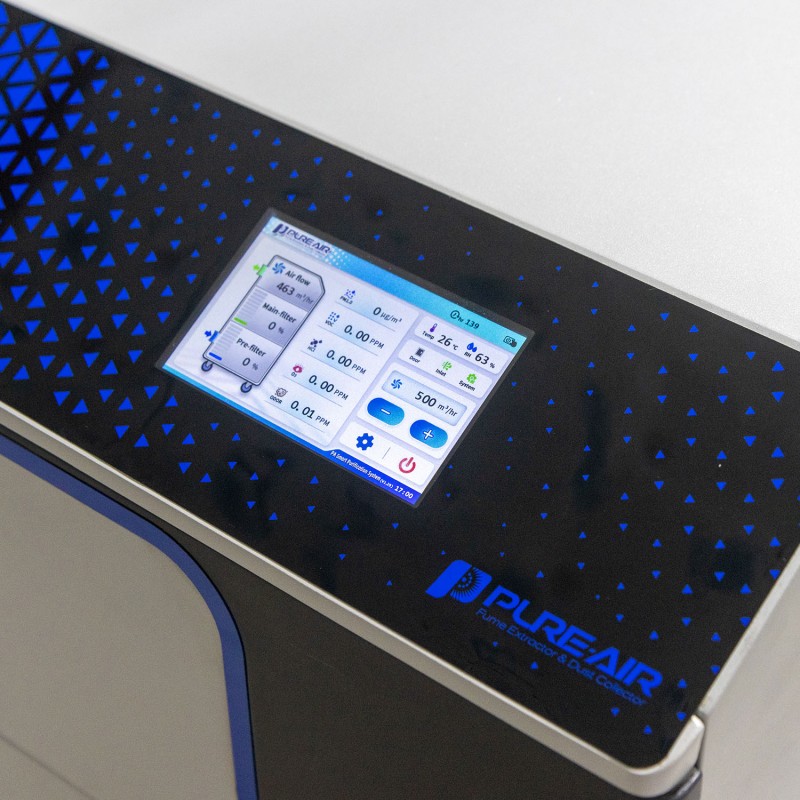
When I step into a shop with a humming laser, the workbench smell and the faint haze tell a story: a laser marking fume extractor is doing its job somewhere, but is it doing it well? Recent studies show that fine particulate levels near industrial lasers can spike by 5–10x during marking cycles — and that raises real concerns for operators and managers alike. (I’ve seen it with my own eyes.) So what should we be looking for beyond the fan noise and the flashing indicator lights?
I’ll walk you through what I’ve learned — not just the obvious checks, but the hidden weak spots that matter day to day — and then point toward smarter choices that actually improve health and uptime. Next, let’s dig into why many common systems still miss the mark.
Why Traditional Systems Miss the Mark
I start here because it’s where most shops get stuck. When people search for solutions, they often land on basic standalone units or ducted fans. But for anyone serious about air quality, read this: industrial air purifiers for smoke should be the baseline — and yet many setups fail to deliver consistent results.
Technically speaking, older designs lean on a single-layer capture and coarse filtration. That might reduce visible smoke, but ultrafine particles and volatile organic compounds (VOCs) slip through. In my experience, relying only on basic filters and suction is like trying to bail a boat with a teacup. You get momentary relief — but not real protection. I mean, look, it’s simpler than you think to test this: measure particulate counts before and after a marking run. You’ll often find spikes that a standard unit didn’t fully remove.
What exactly fails?
First, many systems undervalue the role of staged filtration. A proper chain — pre-filter, HEPA filters, activated carbon — cuts particle mass and chemical odor. Second, airflow design matters: poor placement of the fume extraction duct or inadequate capture velocity leaves pockets of contaminated air. Third, electrical and control limits—power converters and simple motors—restrict modulation. You want variable airflow, not an on/off brute. These flaws combine. The result: systems that show a green LED while the air still carries hazards. I’ve tested units that pass paperwork but fail field checks — and that gap costs health and hours of lost work.
Future Outlook: Smarter Tools, Clearer Air
Now let’s move forward. I’m optimistic but cautious. New solutions mix better filtration with smarter controls — sensors, feedback loops, and modular filter stages. I’ve been involved in trials that pair HEPA stages with targeted activated carbon beds and real-time particle sensors. The combination is telling: when the system senses a spike, it increases capture velocity and activates deeper filtration — then dials back to save energy. That kind of responsive behavior changes the game (— funny how that works, right?).
Also, I want to stress the value of full-system thinking. It’s not just the purifier — it’s how the fume hood, the duct placement, and the laser enclosure work together. When you plan for flow paths and place sensors at likely leak points, you catch problems early. Case in point: in one shop we retrofitted a line with staged filters and better ducts; operator sick days dropped and the downtime for filter changes became predictable instead of random. You don’t need miracles — you need coordination.
What’s Next: Practical Steps for Choosing Better Systems
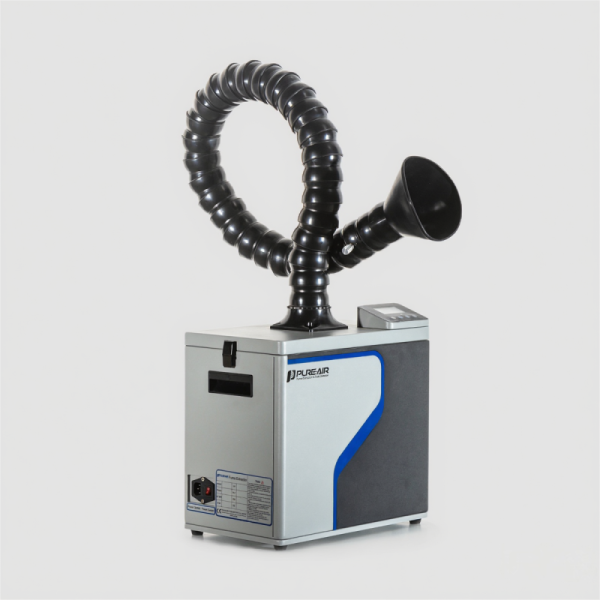
If you’re comparing options, look for these three metrics — they’re practical and measurable. First, capture efficiency at the source: can the unit hold a capture velocity of 0.5–1.0 m/s right where the laser interacts with material? Second, multi-stage filtration specs: verify the presence of pre-filters, HEPA (or equivalent) and activated carbon for VOCs. Third, adaptive control and monitoring: on-board particle sensors, variable-speed drives, and clear maintenance alerts. Those three cover exposure, chemistry, and long-term reliability.
Finally, when you evaluate vendors, ask for real-world test data and a service plan. We want systems that act predictably, not just look good on paper. For a practical step, check units labeled as industrial air purifiers for smoke and compare their in-field particle reduction numbers. I often tell teams: run a baseline test, then run a marked job and measure again. It’s straightforward, it’s telling, and it makes procurement decisions less risky.
To wrap up: pick systems that combine sensible airflow design, proven filtration (HEPA, activated carbon), and smart controls. Those choices make the biggest difference for operator health and uptime. If you want a reliable partner in this space, consider learning more from PURE-AIR.